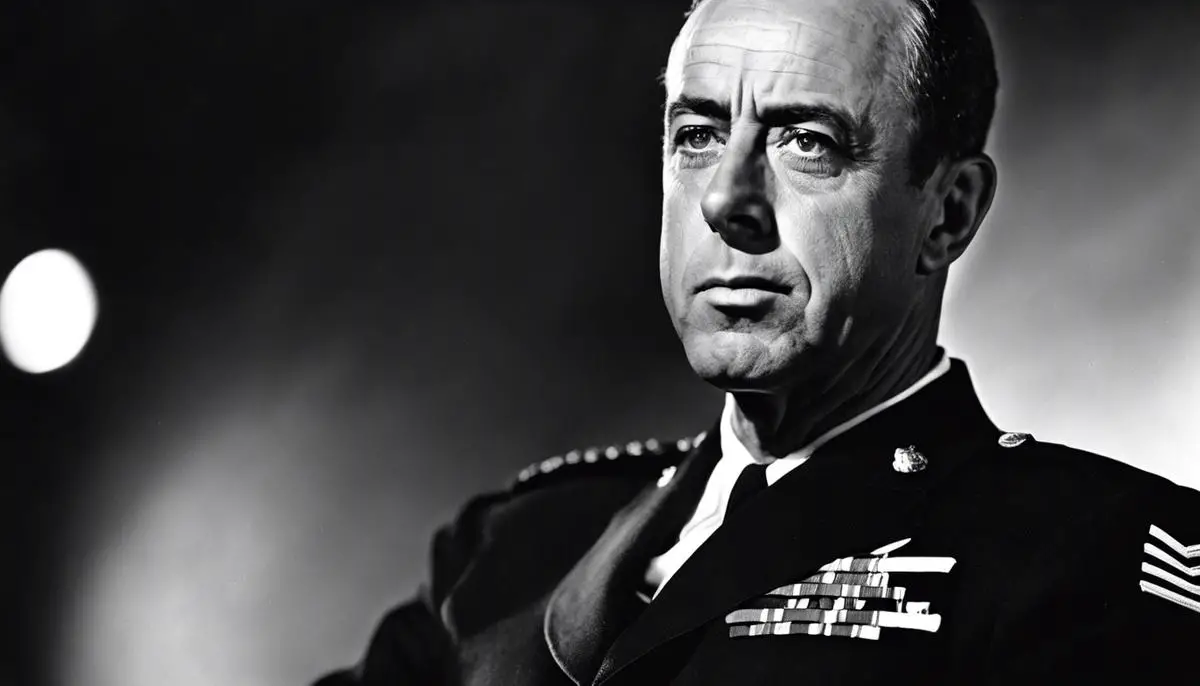
Alan Bartlett Shepard Jr. was much more than just an astronaut; he was a symbol of American ingenuity, courage, and determination. Shepard, as part of the original “Mercury Seven,” the first group selected by NASA in 1959 for the nation’s maiden human spaceflight program, proved a vanguard in the truest sense. Breaking the voracious jaws of gravity, he voyaged where none had before, his intrepid spirit expanding the realm of human capability. To understand his monumental impact, we must trace his journey from his initial years, his selection for NASA, all the way through his groundbreaking missions – the Mercury Redstone 3 and Apollo 14.
Contents
Alan Shepard’s Background and Selection for NASA
Alan Shepard: The Astronomical Trailblazer and his Selection as a Mercury Seven Astronaut
Alan Bartlett Shepard, Jr. (1923-1998), inscribed his name in the annals of history as an American naval aviator, test pilot, and astronaut. Exceptionally known as the first American to journey into space, Shepard’s legacy extends far beyond this singular achievement. His traits and career trajectory significantly contributed towards his selection as one of NASA’s original Mercury Seven astronauts, the pioneers of America’s human space-flight program.
Born into a family with a rich military lineage, Shepard’s keen interest in aviation surfaced during his early years. Subsequent training at the United States Naval Academy and service in the American Navy as a pilot undoubtedly nurtured this curiosity. This baseline education and flying expertise form part of the foundation that led to his selection for the Mercury Seven program.
One significant characteristic of Shepard that played into his selection was his aircraft testing proficiency. After World War II, he attended the U.S. Naval Test Pilot School, enhancing his understanding of flight dynamics and aerospace engineering. Shepard’s collection of experiences as a test pilot, logging more than 3600 hours of flying time, distinctly remodeled him into a candidate with both enduring tenacity and technical acumen.
Another crucial factor in Shepard’s selection was his exceptional physical and psychological health. NASA’s excruciating selection process required optimum physiological conditions to withstand space travel’s daunting challenges. Shepard proved his mettle, passing rigorous evaluations that tested visual acuity, cardiovascular efficiency, and resistance to motion sickness. Probes into psychological resilience also demonstrated Shepard’s capability to withstand isolation and stressful conditions, prerequisites for any space mission.
In addition to these prerequisites, Shepard’s inherent leadership qualities fortified by his military background indeed tipped the scales in his favor. As a naval officer, he demonstrated command authority, excellent communication skills, and collaborative prowess. Moreover, his calm demeanor in dealing with high-pressure situations, a characteristic trait of experienced aviators, was particularly appealing to NASA’s selection committee.
Shepard’s journey from a naval aviator to becoming one of the Mercury Seven astronauts exemplifies the nexus of expertise, resilience, and leadership. Decoding his journey helps understand the qualities NASA sought in its pioneering astronauts, setting precedents for subsequent space explorations.
Drawing from the profile of Alan Shepard sees an unfaltering commitment, innovation in aviation technology, emphasis on physical and psychological wellbeing, and leadership acumen vital for unprecedented ventures into the cosmos. As the celebration of human spaceflight continues, Shepard’s profile stands as a testament to the human potential for continually reaching beyond the skies. This impact is instrumental in etching his name on the chronicles of space exploration far more than just being the first American in space.
The Mercury Redstone 3 Mission
The Mercury Redstone 3 Mission: Objectives, Challenges, and Outcomes – An Analysis of Shepard’s Pioneer Voyage
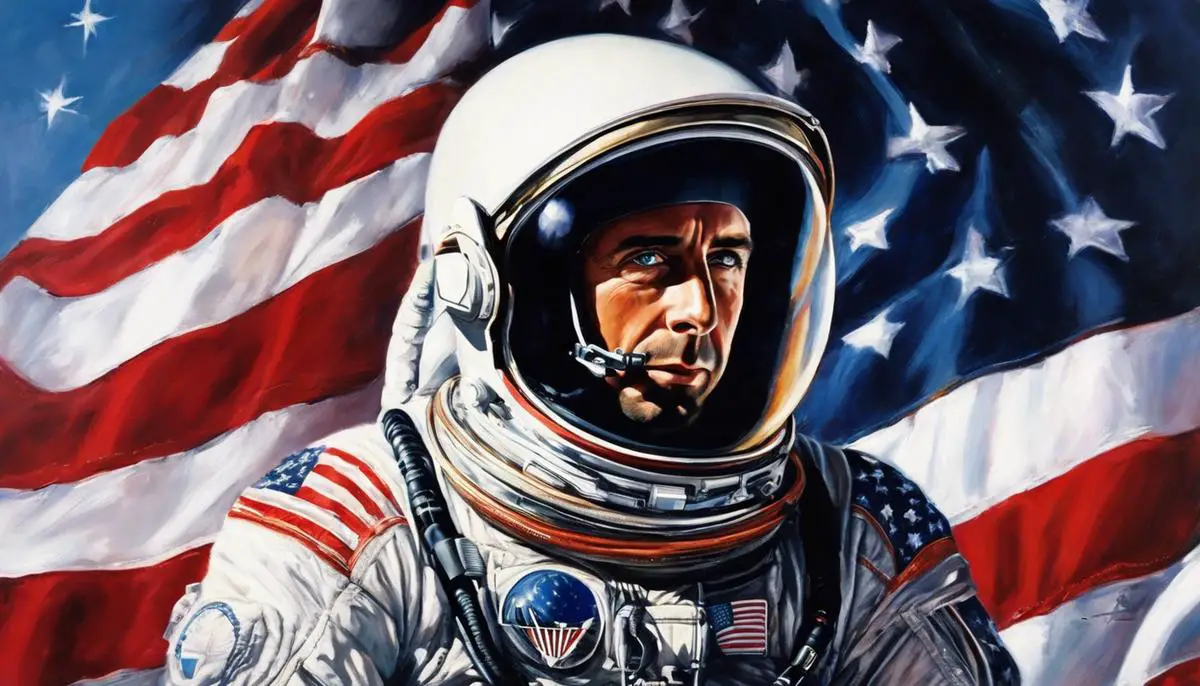
The Mercury Redstone 3 was a milestone endeavor which firmly established the United States in the exclusive club of nations exploring the final frontier – space. This mission earmarked the nation’s first human spaceflight, commanded by the renowned astronaut, Alan Shepard.
The core objective of the Mercury Redstone 3 mission, colloquially known as the “Freedom 7”, was to ascertain if a human could survive and function in space. This revolutionary flight aimed to effectively prove that human spaceflight was demonstrably feasible. Moreover, the endeavor wanted to accomplish a suborbital flight, gather data on physiological responses in the microgravity environment, and to ensure safe reentry and recovery of the astronaut and spacecraft.
As with any scientific mission of this degree, Mercury Redstone 3 wasn’t devoid of challenges. For an endeavor of this magnitude, precise calculations, rigorous processes, and well-devised systems were integral. The monumental task of launching a man into space transcended the mere technical, tackling the unknowns of human reactions to cosmic conditions. Methods to prevent motion sickness in zero gravity, maintain communication during reentry, and to institute safe recovery procedures were but a few of the predominant hurdles faced.
To compound these challenges, the launch of Shepard was preceded by the successful orbital flight of Yuri Gagarin of the Soviet Union, escalating the international pressure on NASA. Thus, the Mercury Redstone 3 mission was not just a test of scientific and engineering prowess, but a crucial gambit in the geo-political chessboard of the time.
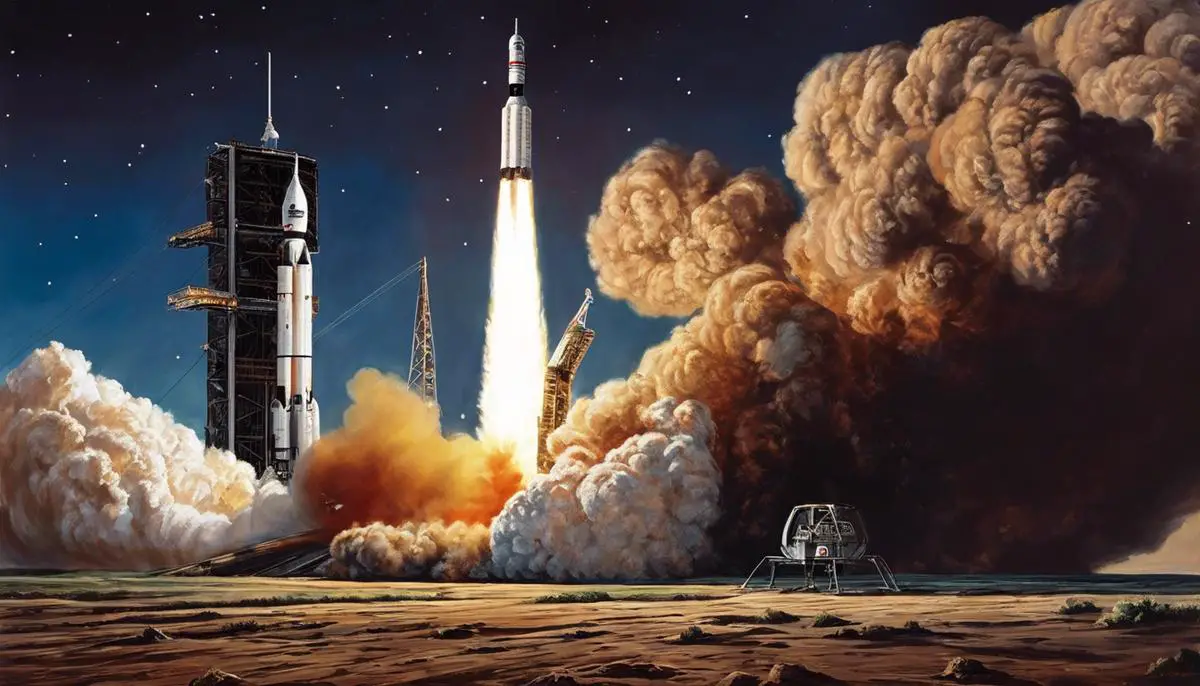
The day arrived on May 5, 1961. After a highly suspenseful countdown marked by pauses for technical verifications, Shepard was launched into space in a spacecraft no larger than a small automobile. After a flight duration of 15.5 minutes, Shepard experienced about five minutes of weightlessness, travelling a distance of 302 miles at a maximum altitude of 116 miles above earth before splashing down safely in the North Atlantic Ocean.
The outcomes of Mercury Redstone 3 proved to be historic, breaching the boundless realm beyond our atmosphere. Despite the flight’s brevity, it confirmed the capacity of a human to endure space flight, perform tasks, and execute crucial decisions in adverse conditions. NASA swiftly collected invaluable physiological and technical data from this mission, forming the foundations for subsequent manned space missions.
Additionally, on a broader cultural context, Shepard’s successful flight brought rejuvenated faith to the American public and indeed the world at large, marking the genesis of an era where humans dared to broaden the boundaries of their world. The Mercury Redstone 3 mission signified not merely a victorious venture into space, but humanity’s unstoppable stride towards uncharted horizons.
The Apollo 14 Mission
Upon reaching number ten on the roster of manned Apollo missions, the goal was clear: to further ingrained scientific understanding of the Moon. Apollo 14, launching on January 31, 1971, took significant strides to achieving these goals. Tasked with the dual objectives of expanding lunar surface scientific activity and finding ways to amplify the validation and sustainability of humans venturing to and operating in lunar conditions, Apollo 14 greatly contributed to NASA’s targeted knowledge-base expansion.
It is crucial to note that Command Module Pilot, Stuart A. Roosa, and Lunar Module Pilot Edgar D. Mitchell marked their first foray into space through Apollo 14. While their contributions were significant, the real linchpin was none other than Alan B. Shepard, their Mission Commander. Shepard was no neophyte in space travel – having been the first American to journey into space in 1961 on the Freedom 7 spacecraft.
Yet, the Apollo 14 mission was more challenging and marked something of a comeback – it was Shepard’s first foray into space in a decade. His prior grounding from active astronaut status due to Meniere’s disease, a disorder that affects balance and hearing, had kept him Earthbound. However, through determination and a groundbreaking surgical procedure, he had been cleared for flight status again.
During this mission, Shepard played a dual role—an explorer and a connoisseur of science. Whilst tasked with conducting a series of resourceful experiments designed by the best scientific minds of the era, Shepard was working in the Fra Mauro highlands — a lunar surface area packed with ancient volcanic rock. This area was thought to offer precious data about the moon’s early structure and history.
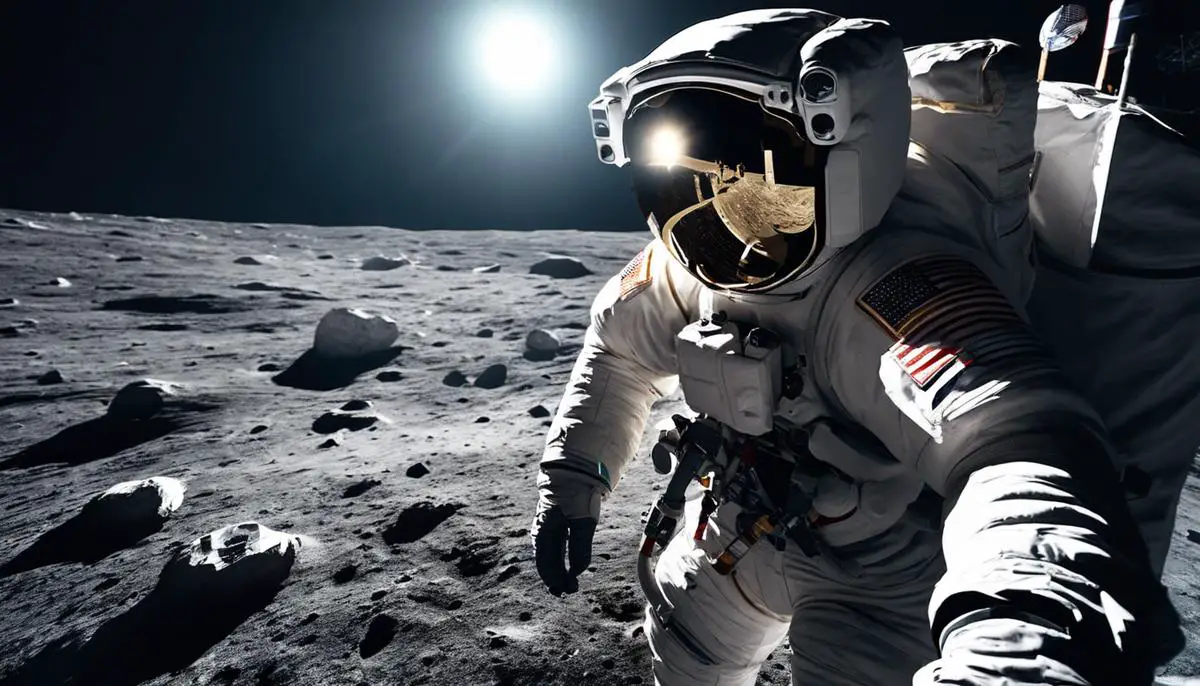
Shepard didn’t just perform science; he brought the human touch to the sterile lunar environment. Showing his more spontaneous side, Shepard famously used his lunar visit to play a round of golf; he hit two golf balls with a makeshift club on the moon’s surface. This moment of levity underlies a critical point—ability to adapt to and manage in a remote environment, showing that humans could operate for prolonged periods in these conditions.
Yet, beyond golf games, Shepard’s legacy truly lies in driving the objectives of the broader Apollo program. He reenergized the mission’s goals, ensured a safe return home after lunar landings, and pushed the boundaries of space knowledge. Apollo 14 successfully returned a large quantity of information concerning the lunar environment, including extensive photometric observations that impact the development of future lunar landing sites.
In summation, Shepard’s role in the Apollo 14 mission was characterized by resilience, expertise, improvisation, and a touch of impromptu humor. His rigorous approach to science, coupled with his passionate personality, led Apollo 14 in contributing meaningfully to the broader Apollo program objectives. But more than his accomplishments, Shepard’s spirit of adventure and ingenuity served as a testament to the very nature of human exploration—an exploration that reaches far beyond our globe.
Alan Shepard’s Legacy
Alan Shepard’s role in space exploration cannot be seen in isolation. He was a tangible defining force in molding the profile of an American astronaut. Shepard’s missions laid a robust framework that would shape the future endeavors of NASA.
Hughes Aircraft Company’s Mercury Redstone 3 carried Shepard as the first American to venture off the face of our planet on May 5, 1961. This pioneering mission’s objective was to successfully launch a man into space and return him safely to Earth. It marked the inception of human space travel for America but it did so in a climate of pressure stemming from the Soviet Union’s prior feat of achieving orbital flight. Despite the international undercurrents, it was Shepard’s resilience and unwavering resolution at the helm of this fledgling program that piloted toward success.
The launch and flight details of his mission unfolded amidst anticipation, both nationally and internationally. Shepard’s successful flight, a mere 15-minute suborbital journey, broke terrestrial shackles, capturing public hearts and minds. His triumph, though seemingly insignificant in comparison to Yuri Gagarin’s orbital flight, deeply influenced American self-perception about their place in space and ignited a cultural shift in attitudes toward space exploration. Shepard’s feat was instrumental in consolidating public confidence, setting a foundation for America’s prolonged commitment to space exploration.
A decade later, Shepard’s exploits in space had not concluded. Having overcome health adversities, he demonstrated his comeback vigor as the commander of Apollo 14. His resilience and determination became the binding ingredients for this mission. Here, he embodied the dual roles of explorer and scientist while maneuvering through the complex lunar geography of the Fra Mauro highlands, a prime target for scientific discovery. Apollo 14’s mission was to return valuable information about the lunar environment, and the crew did just that. Samples and data recovered from the mission facilitated our understanding of the moon’s formation and evolution.
Shepard’s moonwalk also famously included defiantly swinging a makeshift golf club to hit two balls, a resounding spectacle of human tenacity even whilst enveloped by an alien landscape. More than a mere stunt, it encapsulated the spirit that mankind was not simply visitors, but partakers in a cosmic narrative. The indomitable spirit Shepard embodied highlighted the essence of what the Apollo program sought to champion—human ingenuity, resilience, and adventure.
Apollo 14’s success also impacted the planning of future lunar landing sites. Due to their successful navigation and exploration of the Fra Mauro landscape, more audacious journey maps were drafted for subsequent Apollo missions.
In many regards, Alan Shepard was a testament to the attributes that NASA would continue to value in its astronauts: resilience, expertise, commitment, and a keen sense of adventure. These characteristics, diligently nurtured and sharpened over his distinguished career, permeate the annals of space exploration. His legacy is stamped on every NASA mission that has since reached for the stars. Shepard’s ever-present influence is in the sustained growth of our quest to better understand our place within the cosmos.
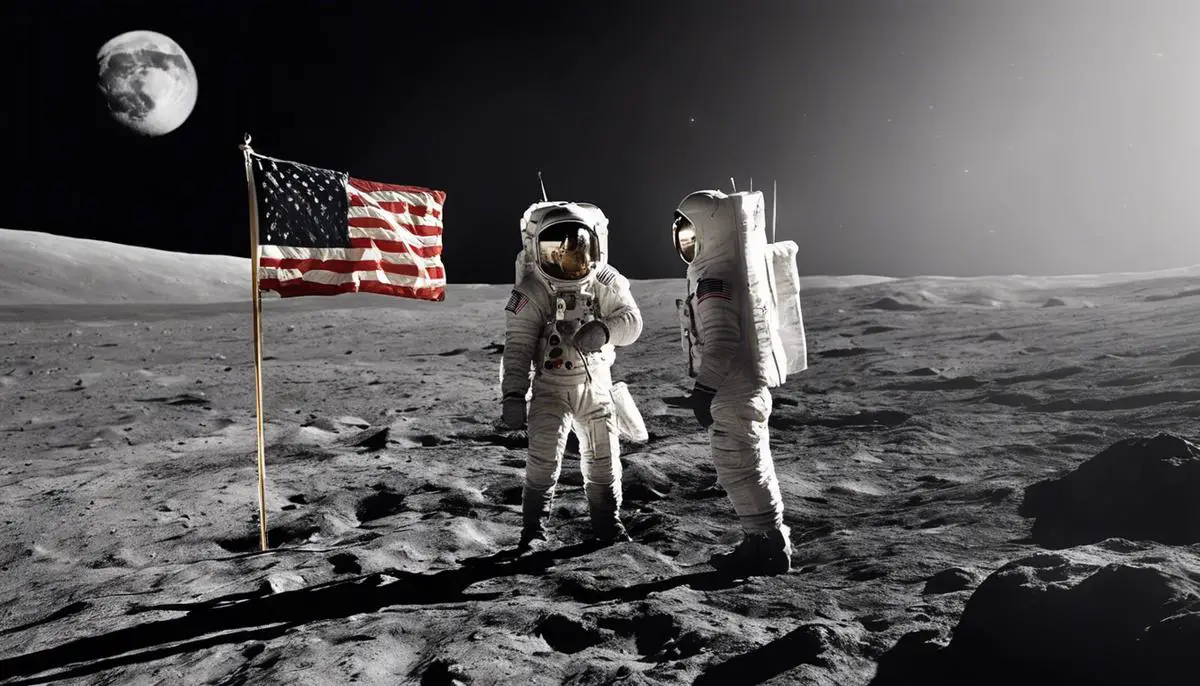
The influence of Alan Shepard, a true pioneer of space exploration, remains profound and far-reaching. His seminal ventures into the cosmos, both through the Mercury Redstone 3 and the Apollo 14 missions, played instrumental roles in redirecting the course of science, technology, and cultural understanding of space capabilities. Shepard’s gallantry and diligence have continued to inspire successive generations of astronauts, sculpting the very fabric of future pursuits in space exploration. Above all else, Alan Shepard stands as an affirmation that the human spirit, buoyed by intellect and courage, knows no bounds in its quest for discovery.
